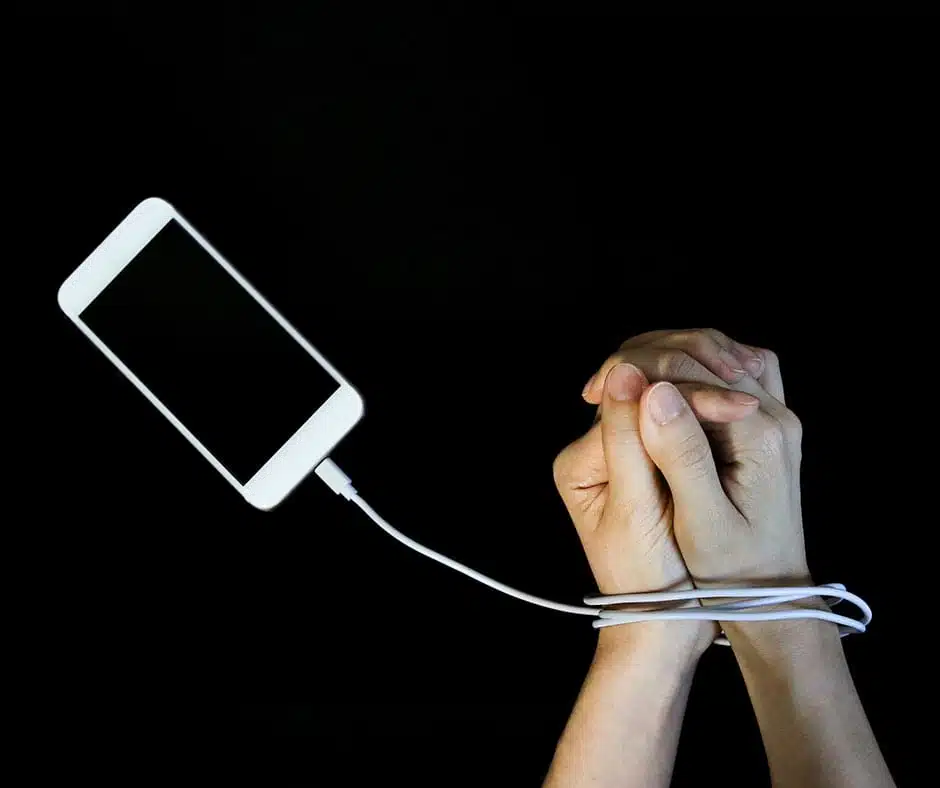

Students are far more likely to discover news while scrolling through social media rather than turning on the television or listening to a broadcast. Most do not even watch the news. Social media apps such as Instagram and TikTok are taking over teens’ screen times and their lives. Even worse, teens cannot be in a public environment without touching their phones.
Some may say social media is a form of overconsumption. With information being easily accessible by just a scroll or tap, many students find themselves doom scrolling during their free time.
“I spend five hours on social media a day,” Kadison Rood, senior, said.
With screen times being high, teens are falling more and more behind older generations and the way they used to live.
“A lot of my friends are on social media, and I like to see what people post,” Kira Ezhilan, senior, said. “Some days you look at my screen time and it is thirteen hours a day. I have been off it lately, but it is hard because everyone is addicted.”
Many of Ezhilan’s peers are close to or even ahead of her time logged. Social media has negatively impacted this generation specifically and will negatively impact others to come. Having access to connecting with people all over the world has thrown in red flags that teens should be aware of.
“I think it is a perfect outlet for cyberbullying to happen and negative experiences you can be exposed to a lot, especially at a young age,” Meghan Whitecar, senior, said.
The main reason why teens use social media so much is because it is something so easy to cure their boredom. However, teens’ attention spans have gone down because when they are not interested in a video, they are able to quickly swipe to the next. The ease with which a teenage mind can find a quick dopamine hit for their brains is a major issue because teens are struggling in the classroom to focus and listen while learning new material due to their need to be entertained within just a few seconds.
“My attention span is zero, so like the next thing while scrolling is entertaining,” Lily Drenski, senior, said.
Social media may have positives, such as the ability to share a cool trip or wish someone a happy birthday. And some see social media as a comfortable space to share their creativity; however, many teens do not know how to balance the usage correctly.
“I think social media could share good ideas, but at the same time it can’t,” Hailey Joy, sophomore, said.
It can be hard for some teens to imagine a day without their phones or social media.
Whitecar said she would read a book or maybe do something to connect to nature.
Others struggled to find an answer, taking a pause before they decided on what would entertain them for the day.
“I would read, call friends or workout,” Rood said.
Clearly some students believe that they could go a full day without social media and find something else to do, oftentimes citing activities that would be far more intellectually, physically, or emotionally healthy than scrolling; however, some felt their lives would be empty without their phones.
Their answer is just one simple statement.
“I would feel depressed,” Joy said. “My phone is good for down time and makes me feel pretty good and happy.”
Teens no longer have the feeling of being bored anymore. Research suggests that the lack of boredom increases depression and anxiety and reduces creativity and peace. But with a world of dopamine hits at our fingertips, there isn’t a lot of time for the benefits boredom can bring, and the result of our search for constant stimulation is an addiction.
“The phone is so stimulating. You can find anything or talk to anyone,” Addie Owen-Kren, senior, said.
Through mixed opinions on whether social media is good or bad, many teens have noticed that social media is something that has taken over their time. This level of awareness is important as teens are realizing that there needs to be a balance between real life and screen life.
The negative impacts of cell phone use tend to overpower all the positive aspects of social media, impacting teen development stages and causing a fear of separation from one’s phones.
“I think our phones definitely hinder our development,” Whitecar said. Reliance on texting and Snapping creates a struggle with face-to-face conversations. In real life conversations, teens need to be able to respond in a timely manner in order for it to continue and not become awkward, they need to be able to read nonverbal communication which is learned when looking up from a phone at another, and they need to listen to another person and not just focus on themselves. These are all skills that are hindered by constant phone use.
There is a heavy reliance on social media and cell phones for teens and probably upcoming generations to come. Platforms such as TikTok and Instagram are always endlessly updating and never run out of videos to show viewers. It is impossible to run out of scroll, and this is part of why those apps are so addicting.
The way teens absorb and use social media is a global issue. It is reshaping not only one school but all schools. Many students have low knowledge on how negatively social media impacts a person, but it’s time for teens to put a word to their experience with it. To describe the social media issue in one word is simply easy: addiction.