The last bell rings and while some students head to their next class, others pack up and walk out the doors, not to skip but to log onto a college lecture from home. Down the hallway, AP students stay seated, flipping through their binders and review packets, studying for the next exam that could determine their college credits months from now.
In one building two different paths are shaping how students prepare for their lives after high school.
While attending their year long courses, AP students follow an organized and structured curriculum, striving to better their future college experience. For some students who are taking three or more AP classes, the classroom environment is what influenced their choice between Advanced Placement (AP) and College Credit Plus (CCP).
“I wanted a physical classroom to go and learn in, “ Vijay Solanki, senior, said. “ You get more help and you’re collaborating with other students.” Solanki enrolled in four AP classes his senior year: AP Microeconomics, AP Calculus (BC), AP English Literature and Composition, and AP Physics 1: Algebra-Based.
Collaboration and consistent depth of study are two qualities of AP study that students appreciate. Students who take multiple AP classes believe the daily routine builds discipline and deeper understanding.
“If you really want to get used to having a lot of workload and the feeling of that then I would recommend AP,” Theo Bica, senior, said.
During “crunch times” like midterms or AP testing months, “it can be a lot of mental stress,” Bica said. However, the structure of the courses keeps student in check.

“AP classes made me more of a structured person,” Alex Minich, senior, said. Minich is taking AP Computer Science, AP Pre-Calculus, and AP Chemistry. “The hard work helps me build up good studying habits and to stay organized.”
Some students may prefer AP classes over CCP because of their academic, instructional, and future benefits.
“You learn more in AP because you have more class time, and CCP classes are harder to keep up with if you don’t have reminders,” Ronda Farah, senior, said. Farah takes CCP College Comp 1020, AP Pre-Calculus, and AP Environmental Science.
In contrast, CCP classes are typically one semester long and sometimes online. CCP allows students to have fewer in-school classes, therefore shortening their high school experience.
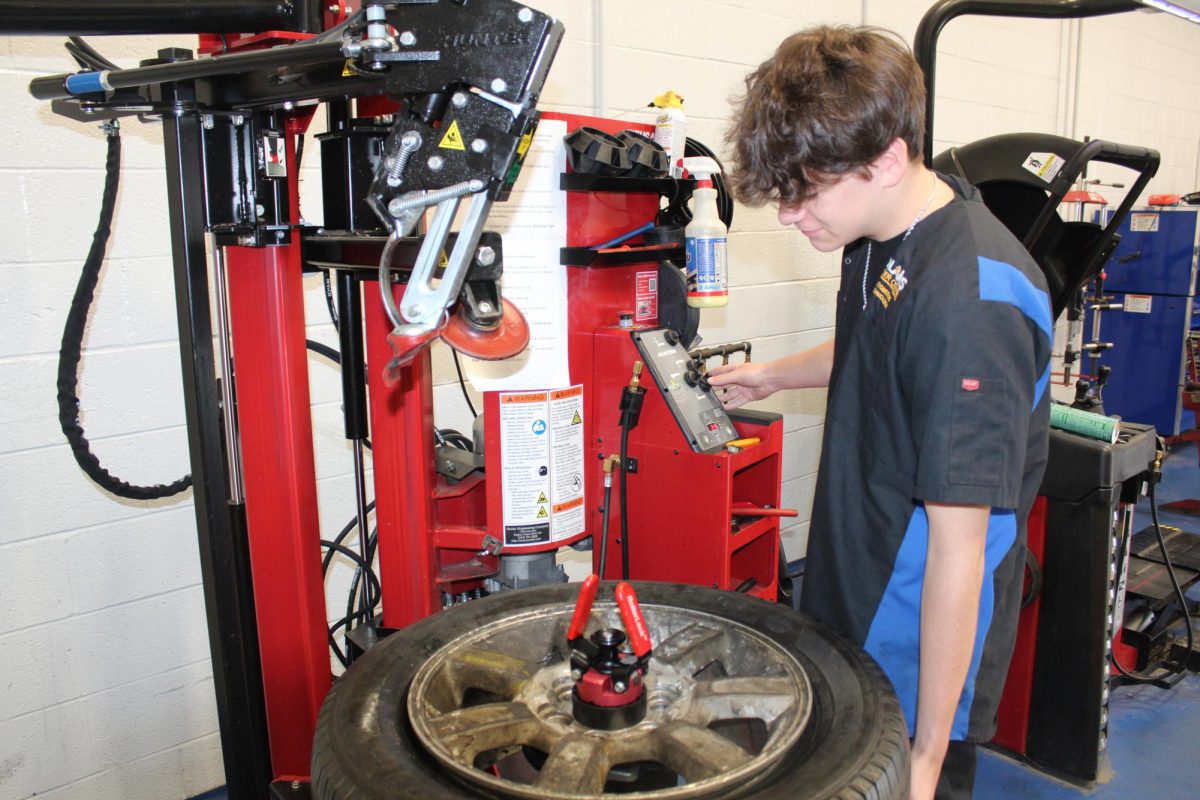
“Like kids before have graduated their junior year, and that gives them like a foot out the door pretty much,” Jace Barnhizer, senior, said. In addition to his Animal Health program at Polaris, Barnhizer studies AP Pre-Calculus at the high school and takes Principles of Biology through Cuyahoga Community College.
Students raised one consistent concern about CCP classes: self discipline. Since many courses are online, it can be easier to procrastinate. Several students mentioned that staying organized, by using calendars or homework reminders, is an essential for keeping up and not falling behind.
Other factors that may differentiate the two experiences include the amount and depth of education students receive, the amount of the day students spend engaged in learning, and the amount of credit that they receive at universities for classes taken in high school.
There are many students who have enrolled in both AP courses and CCP courses.

“It’s manageable. If professors or teachers just assign work without explaining, then it becomes harder,” Rahi Borawake, junior, said. After a CCP course in the summer, Borawake opted to take AP Computer Science and AP Chemistry during the school year.
Despite differences, students agreed that each type of education presented its own challenge. For AP students, the challenge came with the depth and breadth of learning, requiring them to deepen understanding and analytical skills. For CCP students, those challenges included the potential for inconsistent instruction and the need for self sufficiency, requiring them to learn independence and study skills.
Students suggested CCP offers flexibility, independence, and the slight chance of graduating a little earlier and AP offers daily structure, collaboration, hands-on learning, and deeper preparation for college-level expectations. Both options allow students to earn college credits and boost their GPA.