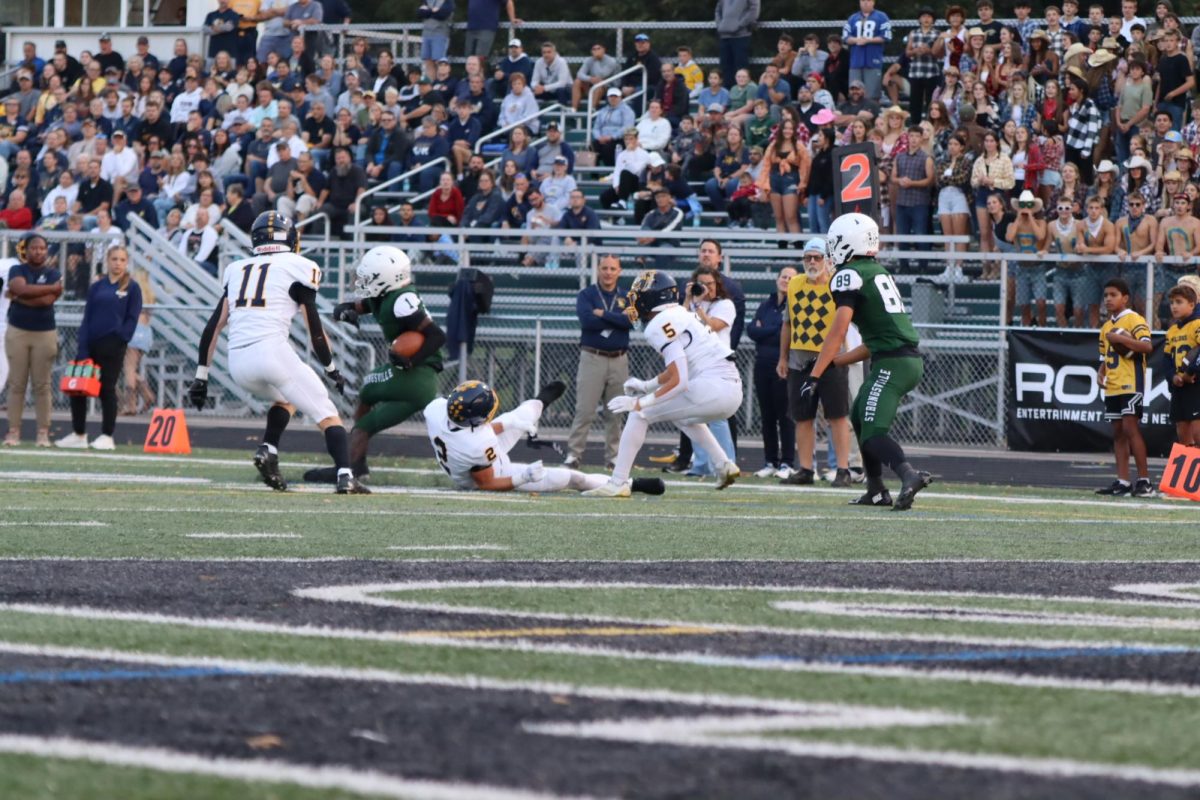
Alex Espay, senior, has played football for the Mustangs for the last four years. In this time, he has earned All-Conference, All-District, and All-Ohio honors. A wide receiver, Espay will play for Chula Vista San Diego next year.
The recruiting process is like shopping for clothes. Coaches can’t decide if they want the red sweatshirt or the green one. While the coaches like both of sweatshirts, they’re still trying to figure out if they have anything they could wear with them. They’re figuring out which one they would look better in. When I started the recruiting process, I was that sweatshirt. Maybe the coach likes me and another player and is constantly trying to compare. The coach thinks, “Which kid is going to help us win?”
Usually people don’t fully understand that getting recruited at all in high school is a blessing because now an athlete is a part of a percentile of people who could be considered top athletes.
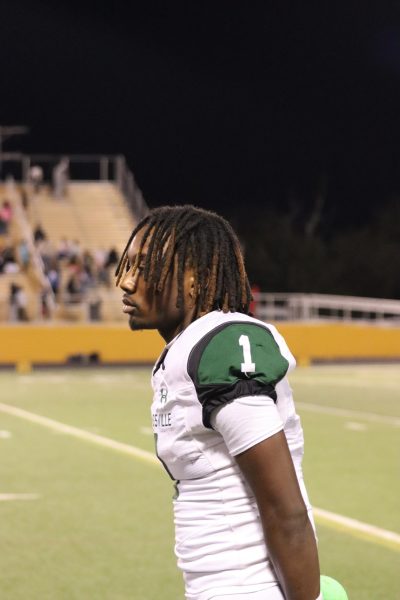
The first part of the recruiting process requires an athlete to have good film so that they can get the opportunity to get their name out there to some schools that interest them or are interested in them. The plays the athlete makes on the field, the athlete’s attitude, and the athlete’s willingness to get better everyday in their sport will give them a huge boost in the process.
I entered my film into an app called hudl. Hudl helped me gather all of those recorded plays that I made during the game and put them into a short clip making my end-of-season film. This step is important. After my film was done loading onto the app, I sent it to as many coaches as possible via text, email, or even twitter or X.
In addition to film, athletes have the option to send them all of the achievements they were able to earn during the season. For example, an athlete might report All-Conference, Offensive Player of the Year, or Defensive Player of the Year honors.
A big part of the recruitment process is waiting. An athlete may not always get a response from the school they wanted, but the key factor in the whole process is to stay patient. I spent a lot of time being patient.
And patience pays off when a school finally reaches out.
The next most important part of the recruitment process is connecting with the schools and getting to know the coaching staff of those schools who have shown interest.
When I hit this part of the process, coaches started to text me back, we were arranging a way to meet in person, and we were talking about the school and the opportunities I would have there.
Usually, coaches will come to an athlete’s school sometime throughout the day to talk to them. Handshakes are exchanged, and athletes and potential coaches start to talk. This is the simple part: just a normal conversation. If an athlete likes the coach and the school itself, they will keep talking to the coach.
This is the final stage. Athletes are now being held to the highest stage in the recruiting process. Coaches are now calling, they are asking about their day, and they’re trying to get them down for a visit. Visits are very important because there’s no other way to tell what school will feel like home.
Finding a place to call home can be very challenging.
The recruiting process is something that takes time and patience, like many other things in life. My process was a very long one.
I have been visiting schools since my sophomore year of high school. I visited schools like Toledo, Kent, Buffalo, and Akron, to name a few. And while they were all amazing schools, they just were not for me. I slowly lost hope in finding my school and almost gave up on a dream that I have had all my life.
My own coach told me time and time again to be patient and my time will come, which I didn’t fully believe at the time. It can be mentally and physically draining dealing with training, school, and trying to find a school you would actually want to attend.
When I was visiting schools, I looked at how the offense was run because I play that side of the ball. I also paid close attention to the coaches so I could get a better understanding of how the coaches treat their players and how they run things in their program. I also looked at the atmosphere and thought about whether I could play there for the next four years. I think for any athlete, if you don’t fully believe you can be there four years, then it probably isn’t the right program for you.
I am fortunate enough to have found a place to call home in Chula Vista San Diego. I chose this school because the coaches were very welcoming, the team was awesome to be around, and the atmosphere was amazing. Most importantly the coaches ran their program like professionals. What I mean by that is I asked myself: Do they encourage their players when their heads are down? Do they want you to get better everyday? Will the coach have your back?
Those things stood out to me most about this school and are the overall reason I chose it.