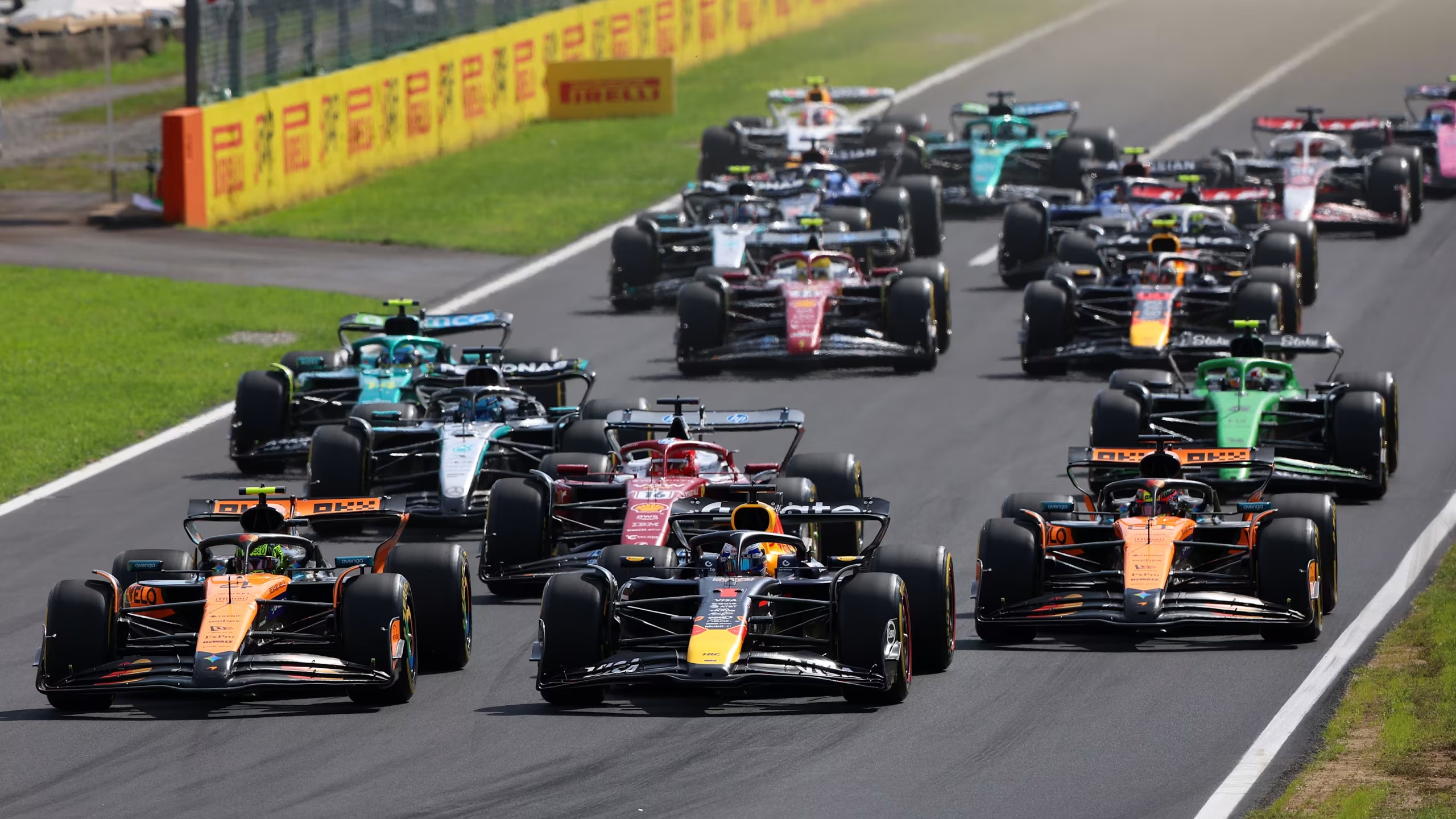
When your gas pedal is to the floor and you start slowing down, you would suspect there’s a problem with the car, but in F1 this has become the new normal.
With the changes to the power unit and the cancelled races due to war in the Middle East, this F1 season is drastically different from any season before, as the style of driving and competition has shifted from driving to equipment management.
F1 is the most popular motorsport in the world, but it’s being ruined by politics and new regulations that make the racing worse.
Four-time World Drivers’ Champion Max Verstappen put the state of the sport best when he said, “It feels a bit more like Formula E on steroids.”
Drivers went from actually racing the cars to worrying about battery deployment. Instead of worrying about how to get around the car in front of them, they just have to wait for the other car’s battery to run out.
In the 2025 Melbourne Grand Prix, there were 45 overtakes compared to this year’s whopping 120 overtakes. Most of these overtakes were due to the car in front’s battery running out then the car behind passing and vise versa, creating a yo-yo effect.
The slow down and speed up kind of racing F1 has become is completely artificial and does not create any excitement from most fans or drivers.
On the other side of this debate is seven-time World Driver’s Champion Lewis Hamilton who said, “It’s the best form of racing.”
What you believe comes down to what you think racing truly is. Is it just battling other cars and overtaking or is it trying to push the car to its limit and being on the very edge of your tire’s grip trying to perfect the racing line?
New regulations have also impacted team racing.
On the team side of the sport, Audi has taken over Kick Sauber, keeping Nico Hulkenberg and Gabriel Bortoletto as their drivers, and Cadillac has also joined F1 as the eleventh team on the grid, bringing veterans Sergio Perez and Valtteri Bottas as their drivers. Both of these teams are performing surprising well for being brand new teams navigating the new regulations. Mercedes and Ferrari are currently leading the charge through this new era, with Kimi Antonelli leading the championship in his sophomore year going into the Miami Grand Prix.
Some teams can’t seem to find their footing, such as Aston Martin who hired on Adrian Newey in the offseason and Red Bull racing who have been losing key staff over the past few seasons, such as Helmut Marko, Adrian Newey, Christian Horner, and Gianpiero Lambiase, better known as GP, who is leaving in 2028. The defending Constructors’ Champion McLaren has been off to a rocky start, especially driver Oscar Piastri who crashed on the warm-up lap of the Melbourne Grand Prix and the defending Driver’s Champion Lando Norris DNF’d in the Chinese Grand Prix.
Along with some teams and drivers being unable to find their footing due to the new regulations, the new regulations also pose a dangerous new threat, shown in the Japanese Grand Prix with Ollie Bearman taking a 50g crash, causing him to break his knee. The crash was due to a massive burst of overspeed around 50kph. Drivers warned the Federation Internationale de l’Automobile, the governing body of motorsport, of this threat, but instead of protecting drivers, the FIA has instead decided to protect the interests of the constructors by focusing more on battery power instead of engine power.
With the introduction of the new regulations and the negative reception they have gotten from lots of drivers and fans, the FIA has scheduled a number of meetings in April to discuss any potential changes to the regulations with stakeholders, but that leaves fans with the biggest question in recent F1 history. Will the FIA choose money over enjoyment and engagement over safety, or will they listen to fans and drivers and reduce the reliance on battery power?